

In a display of orbital ingenuity, NASA is preparing for a high-stakes rescue mission that pushes the boundaries of satellite maintenance and commercial space collaboration. On June 27, 2026, the agency is set to launch the "Swift Boost" mission, a critical operation designed to salvage the Neil Gehrels Swift Observatory. As the telescope’s orbit decays more rapidly than initial projections suggested, NASA has turned to the private sector to execute a daring plan: docking a robotic spacecraft to the aging observatory and nudging it back to a sustainable altitude, effectively granting a new lease on life to one of the scientific community’s most vital "dispatchers."
The Main Facts: Why the Rescue is Necessary
Launched in 2004, the Neil Gehrels Swift Observatory was engineered to study gamma-ray bursts—the most energetic explosions in the universe. Over the past two decades, its mission profile has evolved, and it now functions as a versatile, multi-wavelength observatory. However, the laws of physics are catching up with the satellite. All objects in Low Earth Orbit (LEO) experience atmospheric drag, which gradually pulls them closer to the planet. For Swift, this process has accelerated dramatically.
The primary culprit is the sun. We are currently navigating a period of heightened solar activity. When the sun is active, it heats the Earth’s upper atmosphere, causing it to expand. This increased density creates more "drag" on satellites passing through those layers, acting like an invisible tether pulling the telescope toward the atmosphere. NASA officials realized that without external intervention, the observatory would soon lose its ability to maintain a stable orbit, leading to a premature and fiery reentry.
The Swift Boost mission is the agency’s response. By partnering with Arizona-based Katalyst Space, NASA has developed "LINK," a specialized robotic spacecraft designed to rendezvous with, capture, and boost the observatory into a higher, safer orbit. This mission represents a shift in how NASA handles aging infrastructure: moving away from decommissioning as the only option and toward active orbital maintenance.
A Chronological Breakdown of the Mission
The journey to rescue Swift has been a logistical marathon, requiring seamless coordination between NASA’s Goddard Space Flight Center, the Wallops Flight Facility, and private partners.
- Late 2025/Early 2026: NASA formalizes the partnership with Katalyst Space to develop the LINK docking technology, leveraging commercial innovation to address the urgent orbital decay.
- June 9, 2026: Engineers at NASA’s Wallops Flight Facility in Virginia successfully complete the integration of the LINK spacecraft onto the Northrop Grumman Pegasus XL rocket.
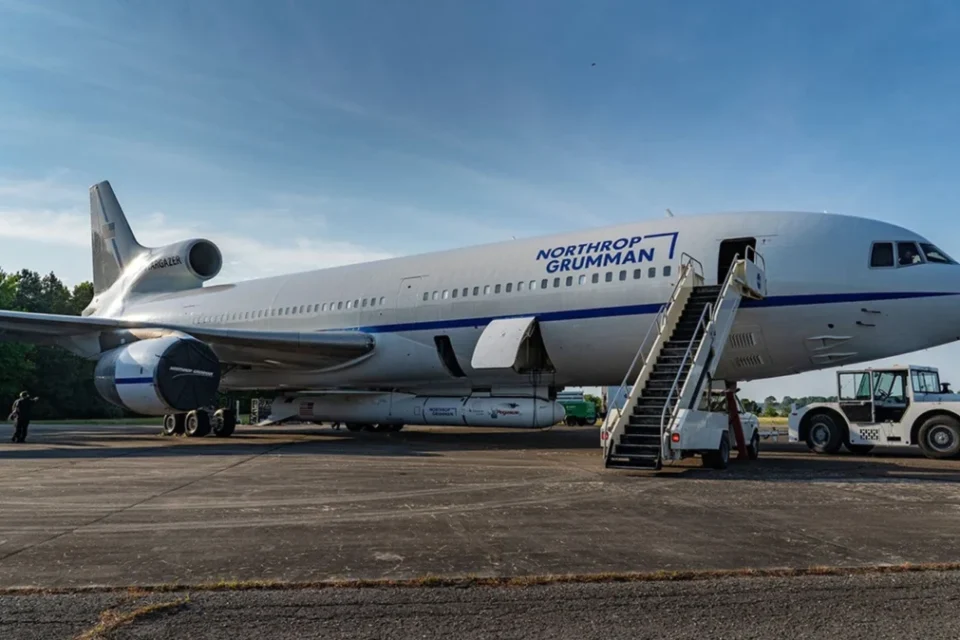
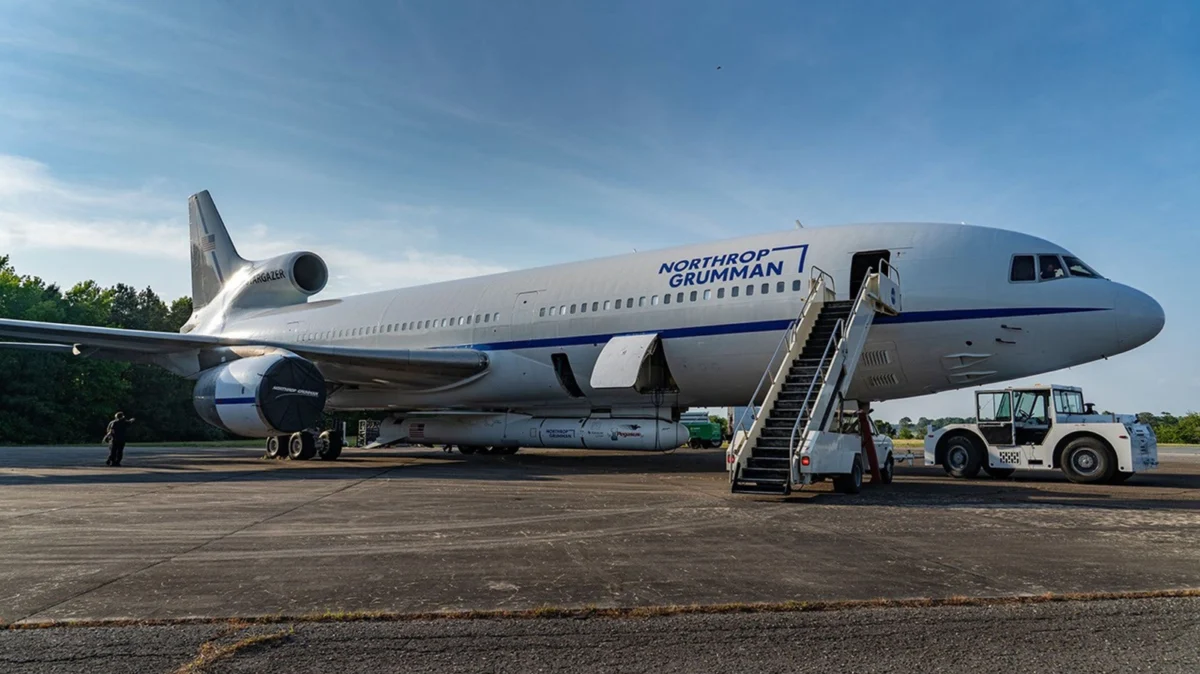
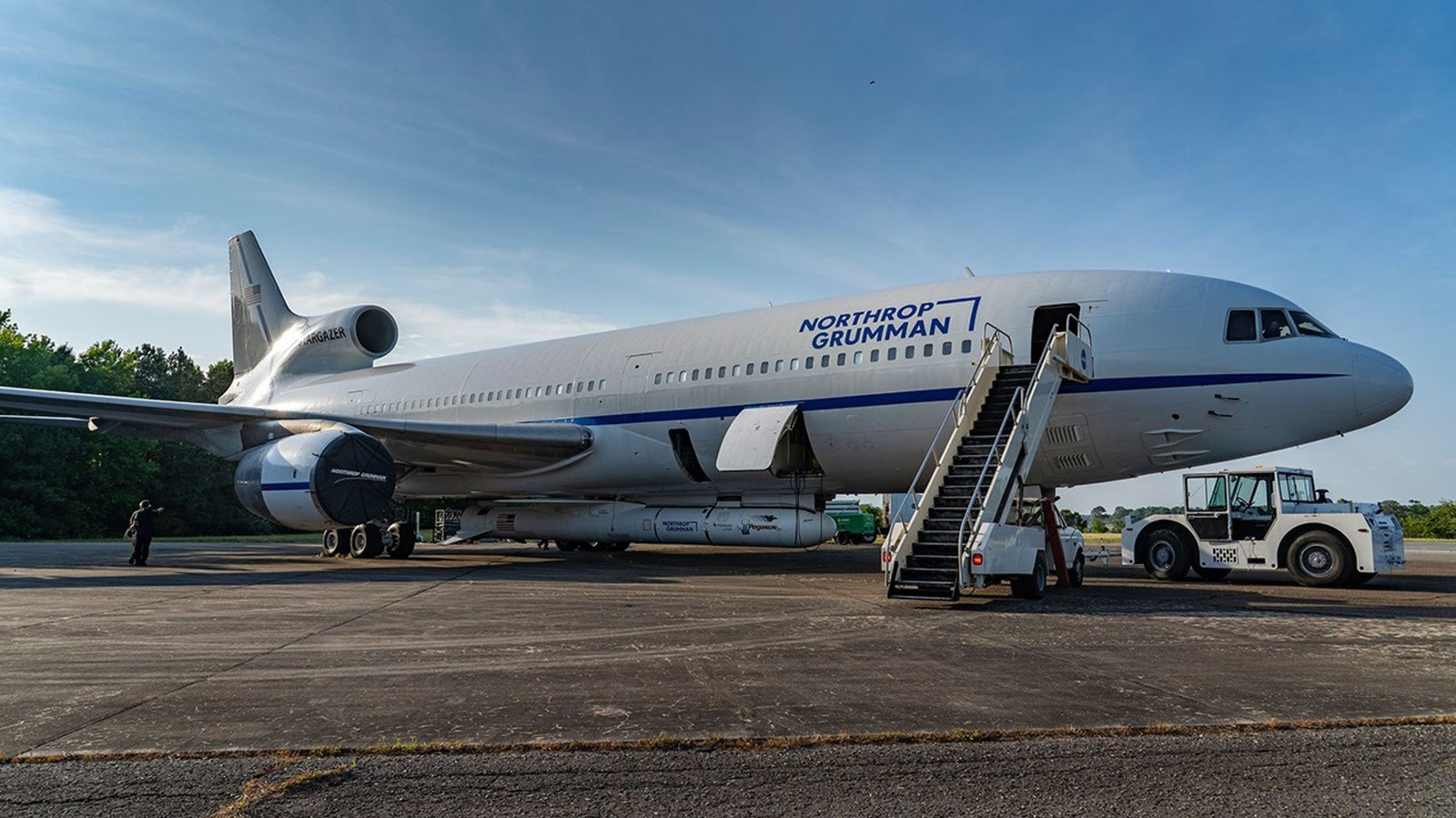
- June 12, 2026: The Pegasus XL rocket is carefully mated to the underbelly of "Stargazer," a customized L-1011 carrier aircraft operated by Northrop Grumman.
- June 18, 2026: Stargazer departs from Wallops, beginning its journey to the Kwajalein Atoll in the South Pacific. This remote location serves as the launch staging ground, chosen for its proximity to the necessary orbital insertion trajectory.
- June 27, 2026 (Scheduled): The final phase of the operation. Stargazer will climb to an altitude of 40,000 feet. Once in position, the pilot will release the Pegasus XL. Following a brief free-fall, the rocket’s motors will ignite, carrying LINK into space to begin its intercept course with Swift.
The entire deployment sequence from the aircraft is a high-pressure, precision maneuver that must occur with seconds-perfect timing to ensure the rocket achieves the correct orbital velocity.
Technical Execution: How LINK Will Save Swift
The core of the rescue mission is the LINK spacecraft, a robotic tug designed for autonomous navigation. Once launched, LINK will use a combination of ground-based tracking and on-board sensors to close the distance with the Swift observatory.
The docking process itself is the most complex phase. Unlike the International Space Station, which was designed for docking, the Swift observatory was never intended to be serviced in orbit. Katalyst Space had to design a docking mechanism that could interface with the observatory’s existing structure without causing damage or interfering with its delicate instrumentation.
Once secured, LINK will act as an auxiliary propulsion system. By firing its thrusters, it will gradually increase the observatory’s velocity, raising its orbital altitude. Once the telescope is safely "boosted," LINK will undock, leaving Swift in a stable orbit where it can continue its scientific work for years to come.
Official Responses and Strategic Rationale
NASA’s decision to pursue the Swift Boost mission is as much about proving technology as it is about saving a telescope. Shawn Domagal-Goldman, a key figure in the mission planning, emphasized the "race against the clock" aspect during the partnership announcement.
"Given how quickly Swift’s orbit is decaying, we are in a race against the clock," Domagal-Goldman stated. "But by leveraging commercial technologies that are already in development, we are meeting this challenge head-on."
This mission serves as a pilot project for the future of the "Space Tug" industry. NASA is demonstrating that commercial entities can play a vital role in orbital maintenance, reducing the need for costly new satellite launches by extending the lifespan of existing assets. The agency’s willingness to publicly disclose the risks—and the innovative solutions employed—underscores a shift toward transparency and agile aerospace management.
Scientific Implications: Why Swift Matters
Why spend the resources to rescue a 20-year-old telescope? The answer lies in the unique role Swift plays in the global astronomical network. Swift is frequently described as a "dispatcher" for the international scientific community.
Because of its rapid-response capability, Swift can slew (turn) its instruments toward a target in space within minutes of detecting a high-energy event, such as a gamma-ray burst. Once it locks onto the source, it broadcasts coordinates to ground-based observatories and major space telescopes, including the James Webb Space Telescope (JWST) and the Hubble Space Telescope.
A recent example of this synergy involved the detection of an X-ray source that proved to be a supernova from 13 billion years ago. Without Swift’s ability to "point and shoot" at fleeting cosmic events, the world’s most powerful telescopes would often be looking at the wrong patch of sky when major events occur.
If Swift were allowed to de-orbit, the scientific community would lose a critical early-warning system. The telescope is, in many ways, the "eyes" that allow the rest of the world’s astronomy infrastructure to focus their attention on the most interesting parts of the universe.
Looking Forward: The Future of Orbital Maintenance
The Swift Boost mission is a harbinger of a new era in space exploration. As the number of satellites in LEO continues to explode—driven by massive constellations and commercial interests—the ability to maneuver, refuel, and boost existing hardware will become a multi-billion dollar industry.
By successfully executing this mission, NASA is not just saving an old friend in orbit; it is establishing a blueprint for orbital sustainability. The techniques used to dock with and move the Swift observatory could eventually be applied to cleaning up space debris or extending the lives of geostationary satellites that provide the world with weather data and telecommunications.
As the launch date of June 27 approaches, the eyes of the aerospace community will be on the South Pacific. While the mission is a daring technical gamble, the potential payoff—continued discovery, the preservation of critical scientific infrastructure, and the validation of commercial robotic docking—far outweighs the risks. The Swift telescope, once destined for a fiery end in the atmosphere, may soon find itself sailing safely in the dark for a second act.
